A regular who went quiet is a customer who used to wash on a steady rhythm and has missed their usual visits. If your store runs on laundry cards or an app, your visit history already shows who they are. To win them back, send a short, friendly note with one easy reason to return, only to people who agreed to hear from you.
The hard part isn't the message. It's noticing. Regulars almost never announce that they're leaving. There's no complaint and no bad review, just an empty spot on the day they used to come in. Here's how to catch it early, and what to send when you do.
Prefer to watch? Here's the 28-second version.
What happens when a laundromat regular stops coming in?
We post a short laundromat marketing tip every Tuesday and Thursday on Instagram, Facebook and YouTube.
More on YouTube →·Follow @freshleadsmarketingWhy a quiet regular is the bigger loss
Do the math on one good customer. Someone who washes every week is 52 visits a year. That's one person and one habit, and it keeps paying you year after year as long as nothing breaks it.
A new customer is great, but they still have to find you, figure out your machines and how to pay, and decide whether to come back. A regular already knows the place, and you know them. Keeping a regular can take one friendly message. Replacing one means finding a stranger, winning a first visit and hoping it turns into a habit.
And regulars leave quietly. They move, they buy a washer, they try the new place across town, or life gets busy for a few weeks and the routine breaks. You rarely hear about it. The only sign is a gap in the visit history, and usually nobody's looking.
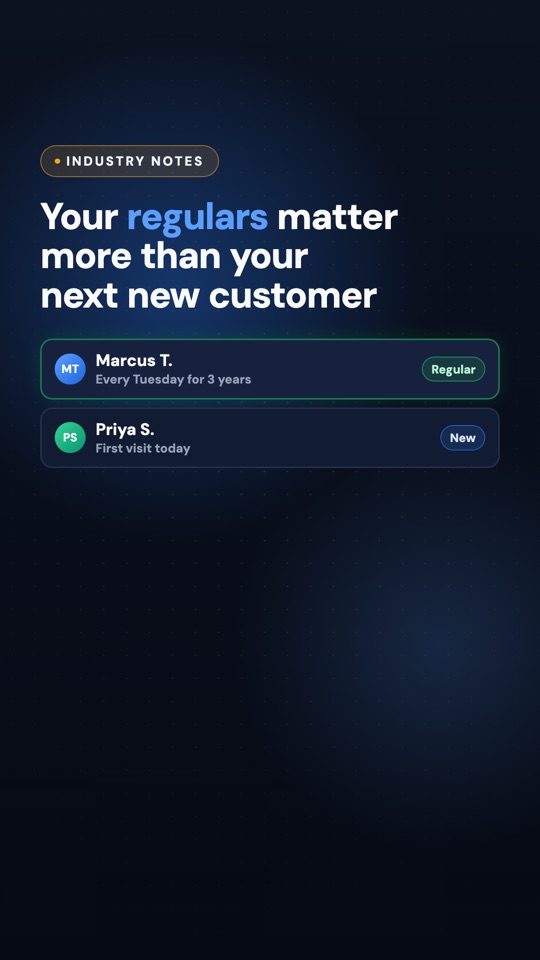
Coming Tuesday, Nov 17 to Instagram, Facebook and YouTube
Why laundromat regulars matter more than new customers
We post a short laundromat marketing tip every Tuesday and Thursday on Instagram, Facebook and YouTube.
Follow so you catch it →The short version: know who your regulars are, thank them by name, and notice when they stop coming. A win-back takes that one step further, in five steps:
- Know who your regulars are. If your store runs on laundry cards or an app, your visit history already shows them.
- Decide what “gone quiet” means. Start at 30 days without a visit, and adjust it to how often your customers wash.
- Send a short, friendly note. Use their name, say you noticed, and keep it about them.
- Give them one easy reason to come back. A free dry or a couple of dollars off, with one step to redeem.
- Only message people who agreed to hear from you, and keep track of who comes back.
How to spot a regular who went quiet
A card or app system records every visit: which card, which day, how much. That history is your regulars list. Sort customers by how often they came in over the last few months, and the names at the top are the ones you can't afford to lose without noticing. Then look at when each one last came in. That column is where every win-back starts.
A coin-only store can't see any of this, because quarters don't have names. If that's you, start collecting contacts now with a sign-up at the counter or a QR code on the wall, the way we lay out in building a customer database from zero. It takes a while, but every name you collect is one you can notice later.
Next, decide what “gone quiet” means at your store. Thirty days without a visit is a good starting point. Then adjust it to how often your customers actually wash. If most of your regulars come every week, you might flag them sooner. If a lot of them come every other week, or only for big loads, 30 days could flag people who aren't gone at all, so give it longer. Pick a number, write it down, and check the list against it every week.
🗓️ One missed week isn't gone
People go on vacation, get sick, or wash at a relative's place for a week. That's why you pick a number of days instead of reacting to every gap. The goal is to catch the habit that broke, not the week that got busy.
What to send a regular who went quiet
Keep it short and make it sound like you. A regular knows your store and maybe your face, so the note should read like it came from the owner, not a marketing department. Three things go in it: their first name, the fact that you noticed, and something about them rather than about you. Skip the story about your new dryers. They need a nudge, not a newsletter.
Then give them one easy reason to come back. A free dry or a couple of dollars off a wash is plenty. The offer isn't a bribe. It's an excuse to break the pause and restart the habit. Keep redemption to one step, with no form to fill out and no code to remember. If your store is unattended most of the day, pick an offer that works without a person there to hand it over.
Here's how that could look as a text from a made-up store:
💬 A sample text you can adapt
“Spin City Laundry: Hi Marcus, we haven't seen you in a few weeks and wanted to check in. Your next dry is on us this week, just show this text at the counter. Reply STOP to opt out.”
It starts with the store's name, so Marcus knows who's texting. It uses his name, says you noticed without a guilt trip, and ends with the opt-out. The free dry is only an example, so pick an offer that fits your prices.
The same note works as an email, with a subject line like “We saved you a free dry, Marcus.” If you're deciding which channel to use, our guide to SMS vs email for laundromat retention covers when each one fits.
Stay within the rules, and track who comes back
Only text or email customers who agreed to hear from you. A laundry card or an app account doesn't automatically mean someone said yes to marketing texts, so check how you collected each contact before you send anything. Every text needs a way to opt out, like “Reply STOP to opt out,” and should go out during daytime hours. If you text from a regular 10-digit business number, it also has to be registered first. That's called A2P 10DLC, the carriers' sign-up for business texting.
Then keep score. Write down who got the message and when, and check your visit history two or three weeks later. Did they come back? Did they keep coming, or was it one free dry and gone again? That last question matters most, because the goal is the habit, not the single visit. To put a dollar figure on what one regular is worth at your store, multiply what they spend on a typical visit by how often they come: a weekly customer is 52 visits a year.
Doing this by hand works, but it's a weekly chore that's easy to skip. It's what the Fresh Leads CRM does for our clients: it syncs customers from the POS, sorts them into new, regular, VIP and at risk, and a win-back workflow reaches out on its own when a regular goes quiet. It works with Laundroworks, FasCard, LaundryCard and CleanCloud.
Common win-back mistakes
- Waiting months to notice. The longer someone's been gone, the more settled their new routine is. Check the list every week.
- Sending everyone the same blast. A quiet regular doesn't need your general promo. They need a note that shows you noticed them.
- Making the offer hard to use. A code, a form and an expiration date in fine print turn a nudge into homework.
- Texting people who never agreed. It breaks the texting rules, and it annoys the exact customer you're trying to win back.
- Chasing forever. One or two friendly notes is plenty. After that, let them be.
What to do this week
Pull up your ten best customers from last month and check when each one last came in. Would you know this week if one of them stopped coming?
If the answer is no, set your “gone quiet” number, write a short note, pick one easy offer, and send it to the regulars who've crossed the line and agreed to hear from you. Then check back in two weeks. That's a win-back program, and it fits on one page.